 DW-01
Driftwood & Stumps
Natural Aquarium Driftwood
Mixed root driftwood
The photographed assortment brings together broad, weathered root junctions, hollowed areas and narrower offshoots.
We are a source-direct supplier of aquarium driftwood for importers, wholesalers, aquarium chains and aquascaping stores. Wood is selected, graded and packed at source, then shipped from Xiamen by the carton or the full container to the United States, Australia and Europe.
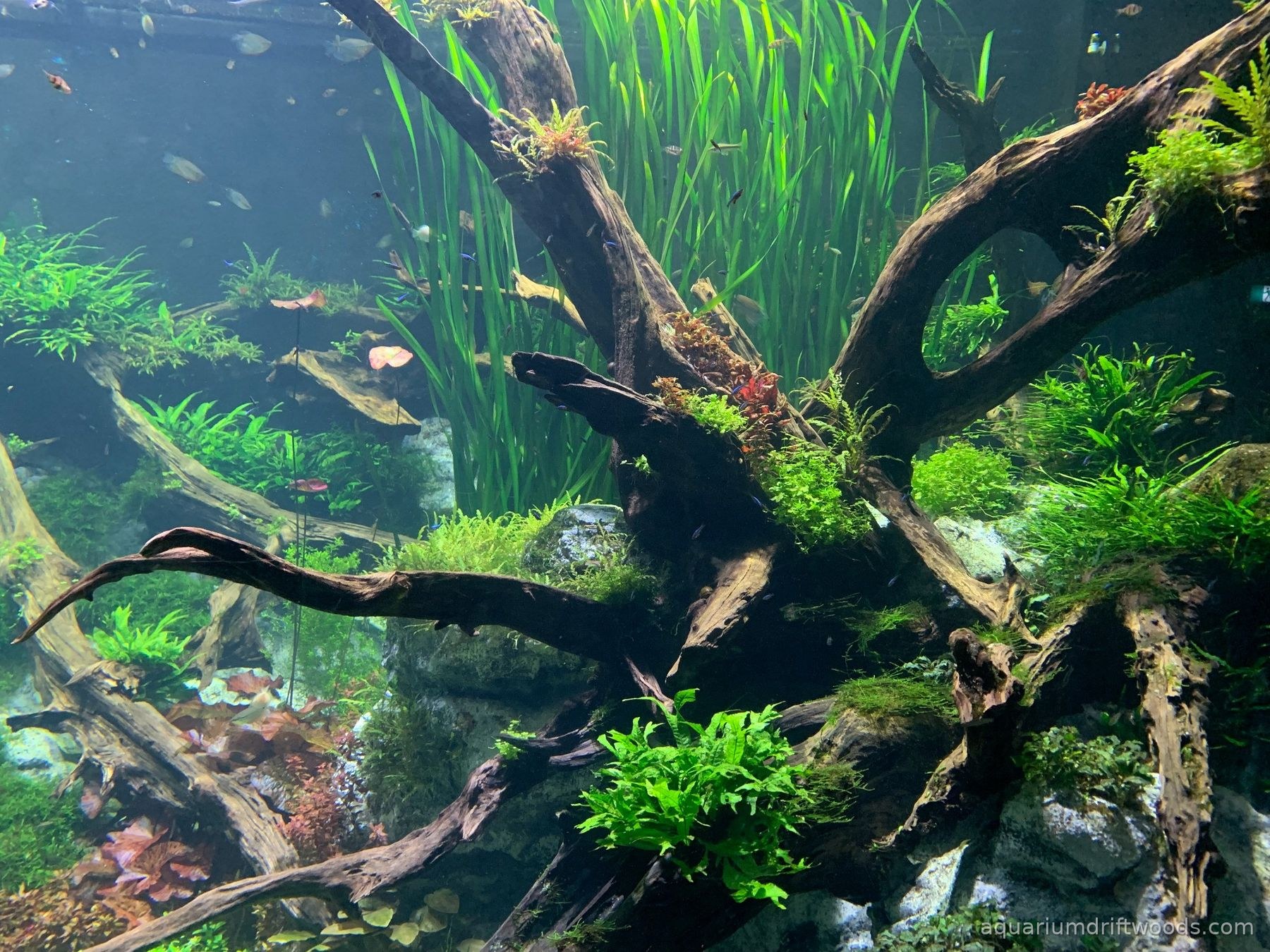
In most aquascapes the wood is placed first. A root or branch gives the tank its main lines and focal point, and the rock, substrate and plants are arranged around it.
Broad stumps bring weight and structure; fine branches suggest the edge of a forest; twisting roots add movement. Depending on the species and preparation, wood can also provide surfaces for epiphytic plants and sheltered spaces for fish or shrimp.
20 wholesale styles, from mixed root driftwood and long branches to spider-style roots, driftwood stumps and bonsai-style trees. Every photo shows real supplied stock. All styles are sold by the 25 kg carton, with a minimum order of 500 kg.
DW-01Mixed root driftwood
The photographed assortment brings together broad, weathered root junctions, hollowed areas and narrower offshoots.
 DW-02
Long curved branches, 40–130 cm
These slender, gently curved pieces are for layouts where a long visual line matters more than a heavy stump. They lead the eye through a river-style aquascape, or extend behind rocks and plants without hiding the foreground.
 DW-03
Light branching root trees
These pale, upright root forms have a recognisable trunk and an open, forked crown. The sparse silhouette suits woodland-style layouts in which the surrounding plants provide the canopy rather than the wood itself.
 DW-04
Raised-knot branch poles
A group of relatively straight poles with pronounced, short projections along the bark. The regular upright form looks quite different from smooth branch driftwood, and it is better described as textured branch stock than as a named botanical variety.
 DW-05
Compact branching roots, 15–60 cm
Compact roots spread into curved fingers around a small central junction. In the grading photograph, the pieces are laid out by approximate size band, so buyers can see what each grade looks like before ordering.
 DW-06
Ridged sculptural roots
These larger pieces show strong longitudinal ridges, cavities and asymmetric uprights.
 DW-07
Knotted upright branches
Round, knobbly growths are concentrated along these narrow upright pieces. The unusual silhouette reads almost like a series of natural branch joints, which makes the product an accent rather than a conventional horizontal driftwood branch.
 DW-08
Miniature tree forms
Short trunks, exposed root feet and fine branch crowns give these pale pieces the proportions of miniature trees. Their asymmetry is an advantage in a nature-style aquascape, particularly once moss or epiphytic plants soften the branches.
 DW-09
Broad root-base stumps
The photographed wood has a flared base, deep grooves and long, low projections extending from a substantial central form. It carries the visual weight of a stump rather than a collection of branches, and works as the anchor for a larger hardscape composition.
 DW-10
Dark root clusters
Dark, angular root arms radiate outward from thicker central junctions. The spaces between the arms are useful for layering rock work and planting pockets, and the deep brown tone gives strong contrast against pale sand or light stone.
 DW-11
Naturally perforated wood
This wood has a weathered, porous look, with a network of openings separated by thin walls. The cavities give it a rugged surface quite unlike the smooth lines of branch wood, and depending on hole size and stability they can create visual hiding spaces.
 DW-12
Wood paired with natural stone
Pale branching pieces are photographed standing beside rough grey stones. The contrast between narrow wood and a compact rock base helps customers plan a small hardscape composition without a large stump.
 DW-13
Compact knotted root pieces
Dense, curling knots and irregular open pockets make these compact pieces far more textured than straight branches. Warm tan and deeper brown areas vary within each form, producing a strong focal accent for a small rocky layout.
 DW-14
Snake-shaped long branches, 50–120 cm
Long, sweeping curves and occasional returning bends define this branch assortment. The unbroken lines suit long tanks, streambed arrangements and layouts in which the wood seems to follow a current or a slope.
 DW-15
Large upright root-tree stock
A collection of tall, pale roots with broad bases and multiple upward extensions. They are most useful when the brief calls for a grove or a raised forest edge rather than a single low branch.
 DW-16
Fine intertwined roots
Fine, rope-like roots fold and braid around one another, with deep grooves visible along each strand. The mass of interwoven lines suggests exposed roots or a riverbank tangle, and is more complex and dense than the open spider-style pieces.
 DW-17
Mixed weathered wood pieces
The photographed assortment includes broken trunk sections, rough root fragments and pieces with varied grain and colour. It suits buyers putting together a mixed selection for aquarium hardscape retail, rather than customers ordering one predictable shape.
 DW-18
Small light branching specimen
A light-coloured miniature tree with many thin offshoots on a relatively compact trunk. The airy crown leaves open space around the hardscape and planting areas.
 DW-19
Pale wide-crown tree wood
A natural tree silhouette formed by one pale central trunk and many short lateral branches. Compared with DW-18, the photographed piece has a fuller crown and a more continuous upright trunk, which makes it a stronger solitary centrepiece.
 DW-20
Dark sculptural bonsai root
An asymmetric dark trunk curves into a fine, irregular branch canopy. Exposed roots give the base an aged look, while the tree-like outline leaves room for planting and stones around it.
We do not sell single pieces. Aquarium Driftwoods supplies businesses that buy in volume: importers and distributors, aquarium wholesalers, pet store chains, online aquascaping shops and terrarium brands. Buying at source means fewer middlemen and the freedom to choose grades and assortments for your own market.
From 500 kg (20 cartons). Shipped as LCL or DDP, a practical way to test styles and grades in your market before a larger commitment.
Up to 10 styles in one 20GP or 40HQ container. Suits stores and distributors who need a broad assortment, and can be combined with aquarium stone.
A 20GP or 40HQ of one or a few styles, up to 19.5 tonnes. The most economical option for established importers and repeat programs.
Twisted roots, broad stumps and radiating branches help establish foreground, midground and background, making planted layouts feel like miniature landscapes.
Suitable natural wood offers places to attach mosses and rhizome plants and can give freshwater inhabitants shaded or sheltered areas. Suitability is material-specific.
Each piece has natural variation in tone, grain, dimensions and form. Buyers can discuss mixed lots, shape preferences and available size ranges when requesting a quotation.
Bogwood, river driftwood, root wood and fine-branch spider wood each behave differently in water. Read our guide to aquarium driftwood for the main types, their benefits in a planted tank and how to prepare each piece before use.
We have worked with aquarium driftwood and natural root products in China for 10 years. Our head office is in Xiamen, China, where we coordinate product selection and export enquiries for overseas buyers.
Our assortment draws on supply sources in China, Vietnam, Cambodia and Malaysia. We mainly export to the United States, Australia and European markets. The actual country of origin, species, sizes, treatment and packing options are confirmed with each quotation.
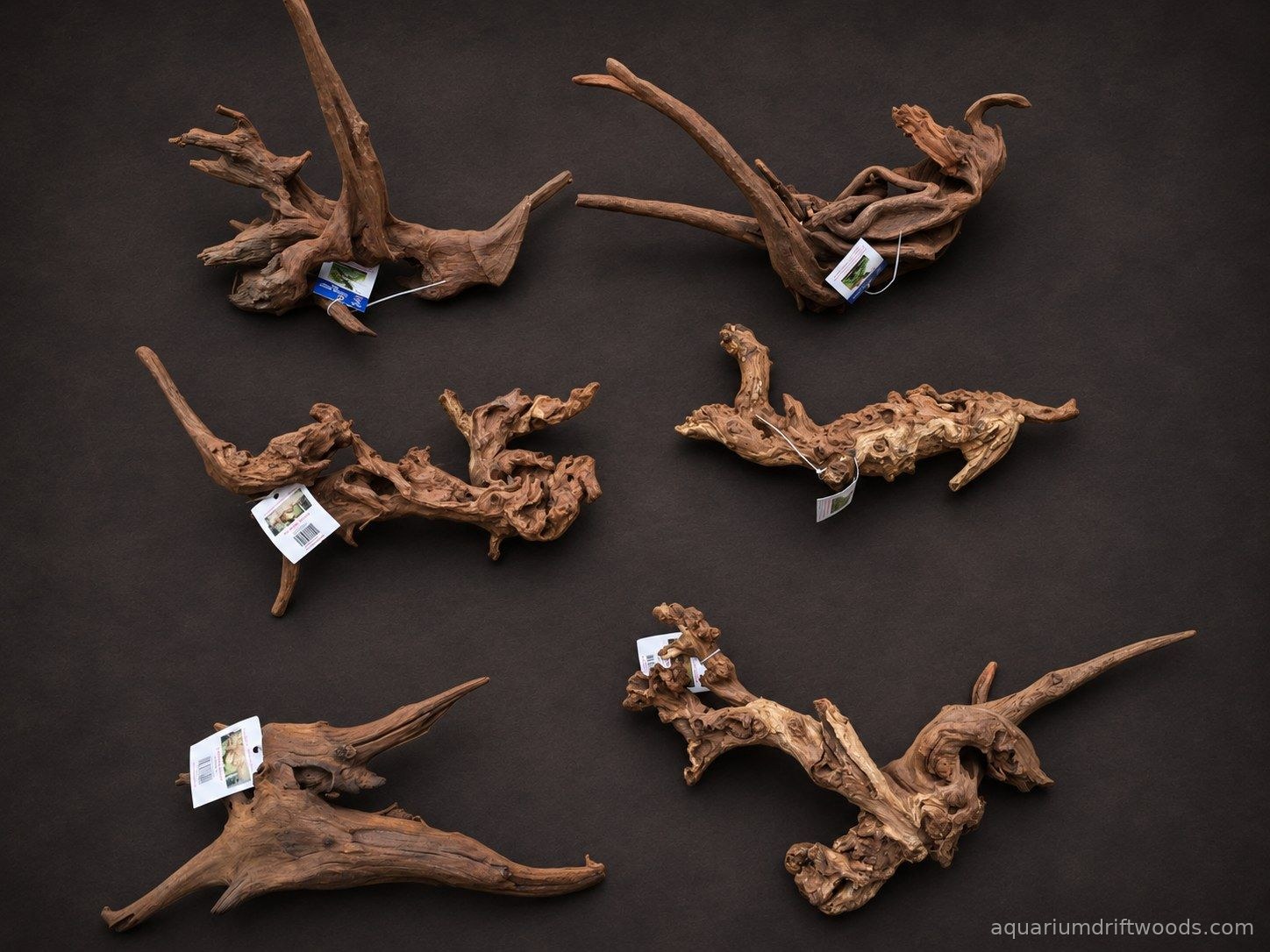
We pay attention to preparation before shipment. Moisture readings help us check drying conditions, while carton packing keeps selected pieces organized for export. The photos below show actual inspection and packing activities. Exact moisture requirements, treatment and packaging specifications can be discussed for each order.
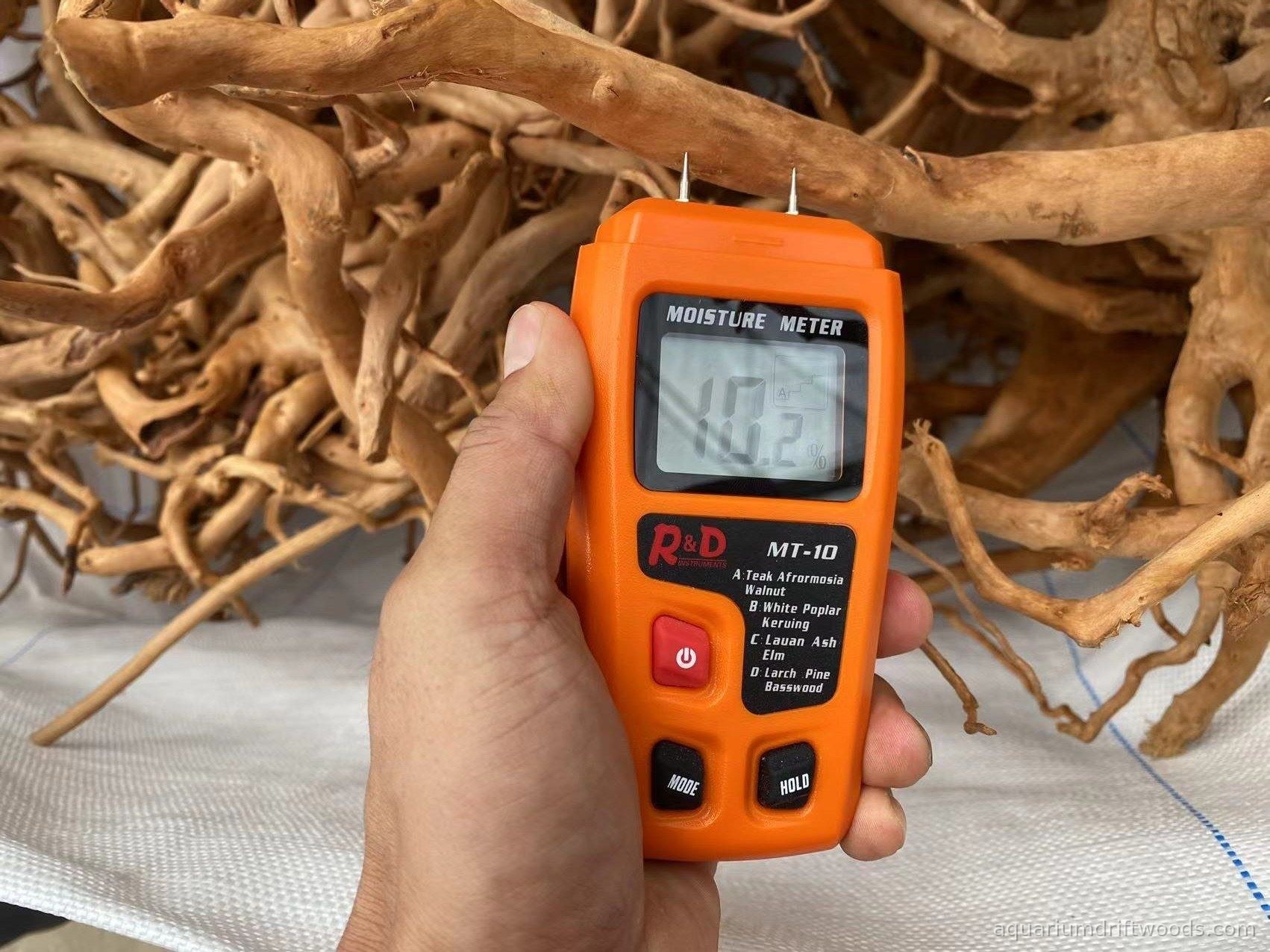
A handheld meter is used to take spot moisture readings on selected pieces. Readings help guide drying checks; they are not a blanket guarantee of a specific moisture level across every piece.
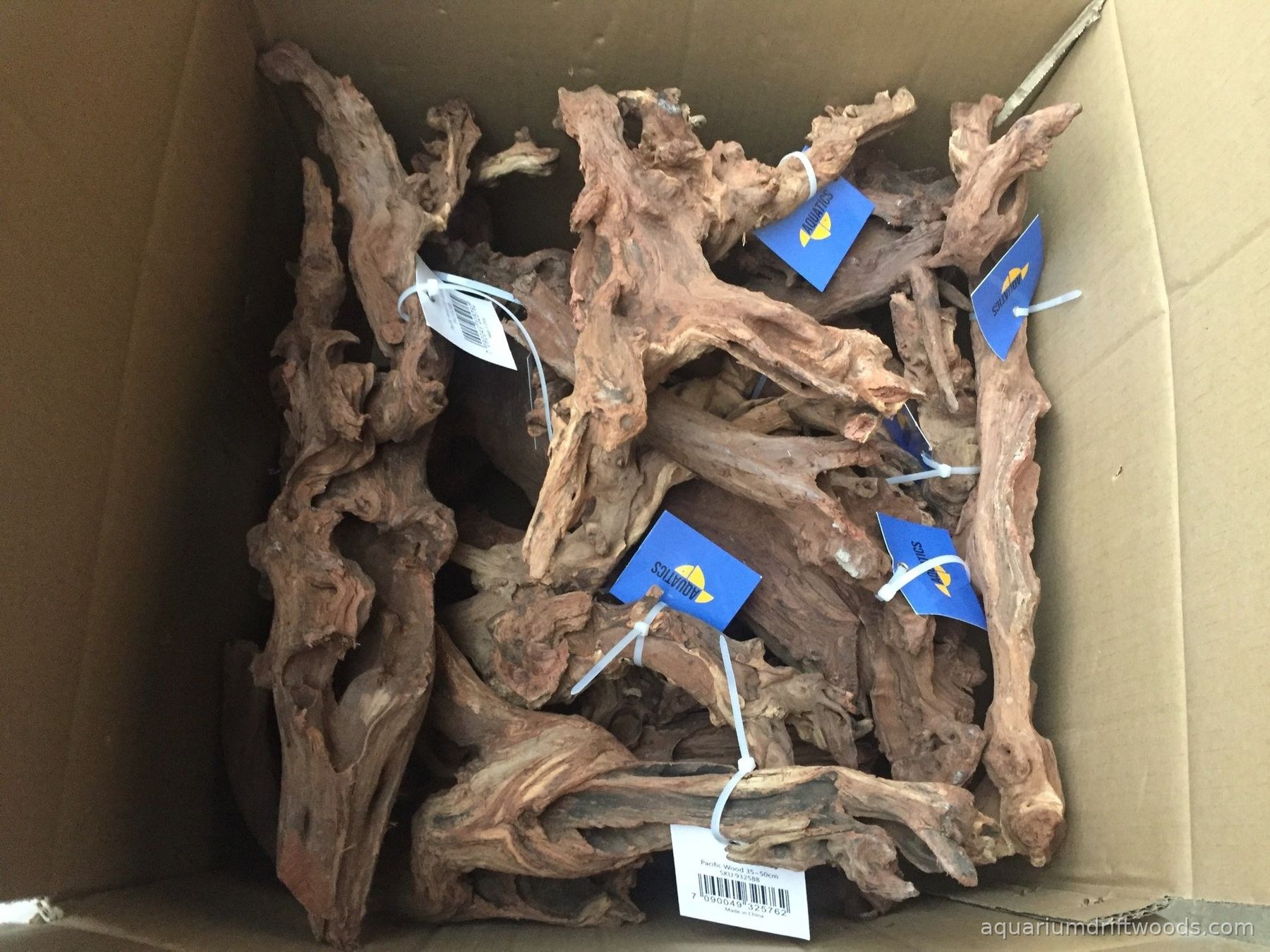
Selected wood pieces are grouped and packed in cartons for handling and shipment. Packing style and carton quantities can be confirmed according to the dimensions, shapes and order requirements.
Aquarium preparation depends on the wood species and intended use. Buyers should confirm freshwater suitability, soaking requirements and any treatment specifications before placing an order.
ASK ABOUT OUR WOOD & PACKING OPTIONS ↗Send us your preferred styles and shipment destination, and we can discuss availability, sizing and bulk quotation requirements.